
Beard to Head Hair Transplant: How It Works, Who Needs It & What to Expect
Understand beard to head hair transplant, from candidate selection and procedure to recovery, benefits, and the results you can expect.
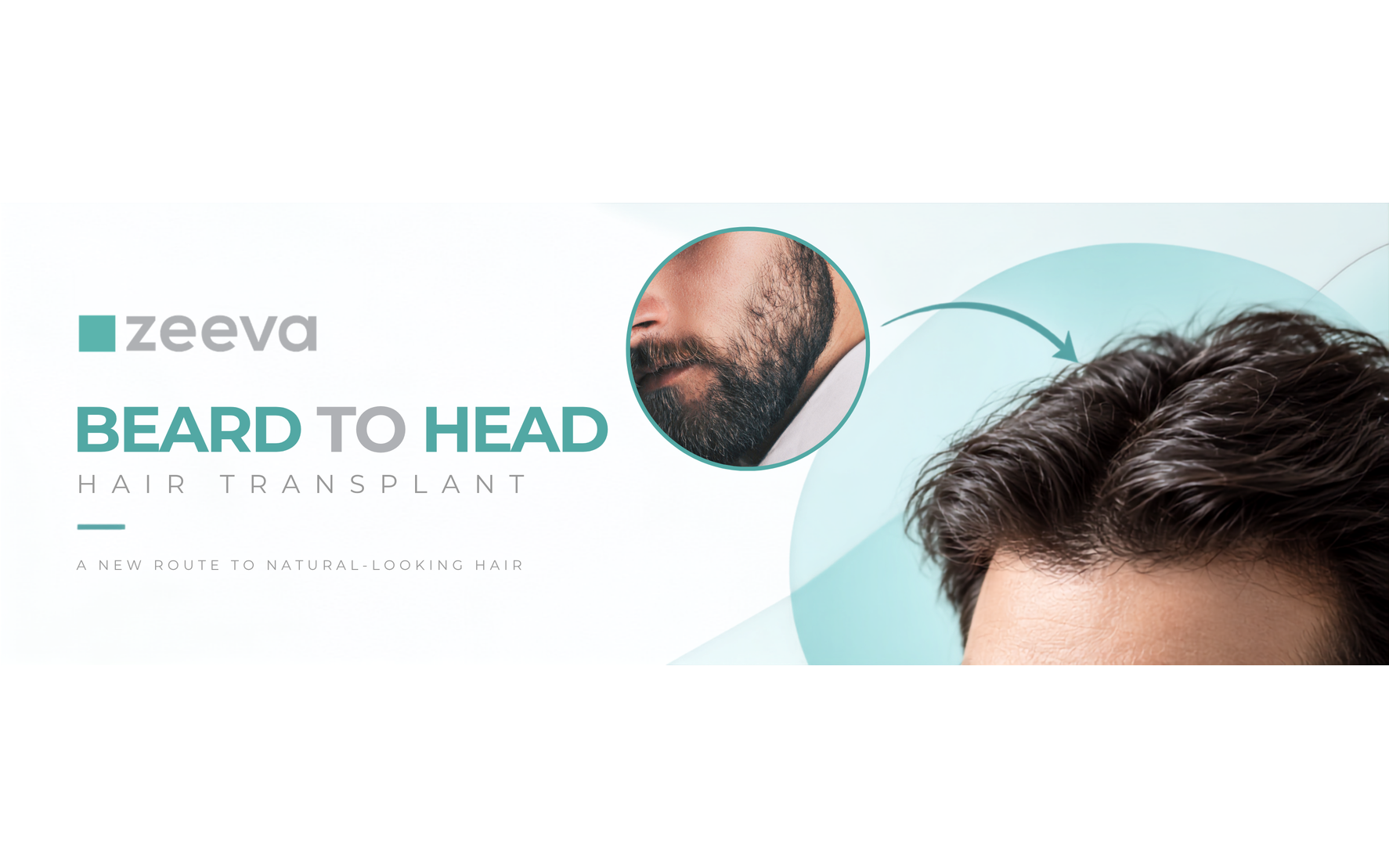
Hair loss doesn’t always leave enough donor hair on the scalp to provide the coverage the patient wants. In such cases, doctors may consider hair follicles from another suitable donor area, including the beard. This is where a beard-to-head hair transplant can become a suitable option.
If you have come across terms such as Beard to Head Transplant or Beard Hair to Scalp Transplant, you may be wondering whether beard hair can really be used to restore thinning or bald areas of the scalp.
The answer is a definite yes, but only in suitable cases. This requires careful assessment by an expert and realistic expectations.
What Is a Beard to Head Hair Transplant?
A Beard to Head Hair Transplant involves extracting healthy hair follicles from the beard and implanting them into areas of the scalp affected by hair loss.
This option is generally considered when the scalp does not have sufficient donor hair to achieve the desired coverage.
The procedure uses follicular units, which are carefully extracted from the donor area and placed into the recipient areas of the scalp. The objective is to improve density while maintaining a natural look.
However, it's essential to note that beard hair has different characteristics from scalp hair. It can be thicker and may have a different growth pattern.
Therefore, the beard hair transplant technique needs to be used thoughtfully rather than simply transplanting it to an area where additional density is required.
Why Use Beard Hair for a Hair Transplant?
Scalp hair remains the preferred donor source for most hair transplant procedures. However, some patients have limited scalp donor availability because of extensive hair loss or previous procedures.
In these situations, a Beard Hair Transplant to Head may provide an additional source of donor follicles. Beard hair is particularly used for adding density to areas where thickness is needed.
A Beard Hair to Scalp Transplant should therefore be viewed as a supplementary approach in appropriate patients, rather than a universal alternative to scalp hair transplantation.
Who May Be Suitable for a Beard Hair Transplant?
Not everyone who is experiencing hair loss can go for beard to scalp hair transplant. Suitability depends on several factors, including the extent and pattern of hair loss, the availability of healthy scalp donor hair, beard density, the characteristics of the beard follicles, and the patient's overall expectations.
That’s why a detailed consultation is the first step, as it allows the doctor to assess both the donor and recipient areas before recommending a treatment plan.
Patients with extensive baldness or those who have already undergone previous hair transplant procedures may sometimes have insufficient scalp donor hair. For these individuals, a Beard to Scalp Hair Transplant may be considered as part of a broader restoration strategy.
How Does the Beard Hair Transplant Technique Work?
The exact approach depends on the treatment plan. However, in general, follicles are carefully extracted from suitable areas of the beard, prepared for implantation, and then placed into the recipient areas of the scalp.
Precision is particularly important because the direction, angle, and placement of each follicular unit influence the final appearance.
Does Beard Hair Look Natural on the Scalp?
This is one of the most common concerns about a Beard Hair Transplant for Scalp restoration.
Since beard and scalp hair are not identical, it's advisable not to use scalp hair for recreating the front hairline. The hairline requires finer, appropriately angled follicles to achieve a natural transition.
Instead, beard hair may be more suitable for selected areas where additional thickness is required like crown / vertex. A surgeon usually makes the choice of deciding where beard hair can be incorporated based on the patient's existing scalp hair and desired outcome.
What Results Can You Expect?
Like other hair transplant procedures, a Beard to Head hair transplant does not produce instant results.
The newly transplanted follicles require time to settle and progress through the normal hair-growth cycle.
You can expect gradual changes rather than an immediate transformation. The final outcome can vary depending on the number and quality of transplanted follicles, existing scalp hair, donor availability, and individual healing.
Therefore, a good treatment plan should always focus on realistic improvement rather than promising a particular amount of hair growth.
Is Beard-to-Scalp Transplant Safe?
When beard hair to scalp transplant is performed on an appropriate candidate by a qualified and experienced medical professional, it is generally considered safe. However, as with any surgical procedure, there can be risks and limitations.
A proper consultation should cover the procedure, expected results, donor-area considerations, recovery, and potential complications. This allows patients to make an informed decision before proceeding.
Final Thoughts
The right approach depends on your pattern of hair loss, scalp donor availability, beard density, and restoration goals. If you are considering a Beard Hair Transplant, discussing your options with an experienced hair restoration team is the first step towards making an informed decision.
Book your assessment
Get a personalised hair restoration plan