
Hair transplant procedures
Zeeva Clinic offers a complete range of hair transplant techniques, each personally performed by ABHRS-certified Dr. Anchal Shah. Whether you need scalp restoration, a beard transplant, or corrective surgery, we have the expertise and technology to deliver natural, lasting results.
Our hair transplant techniques
Every procedure performed by Dr. Anchal Shah, choose the right technique for your needs.

Follicular Unit Extraction
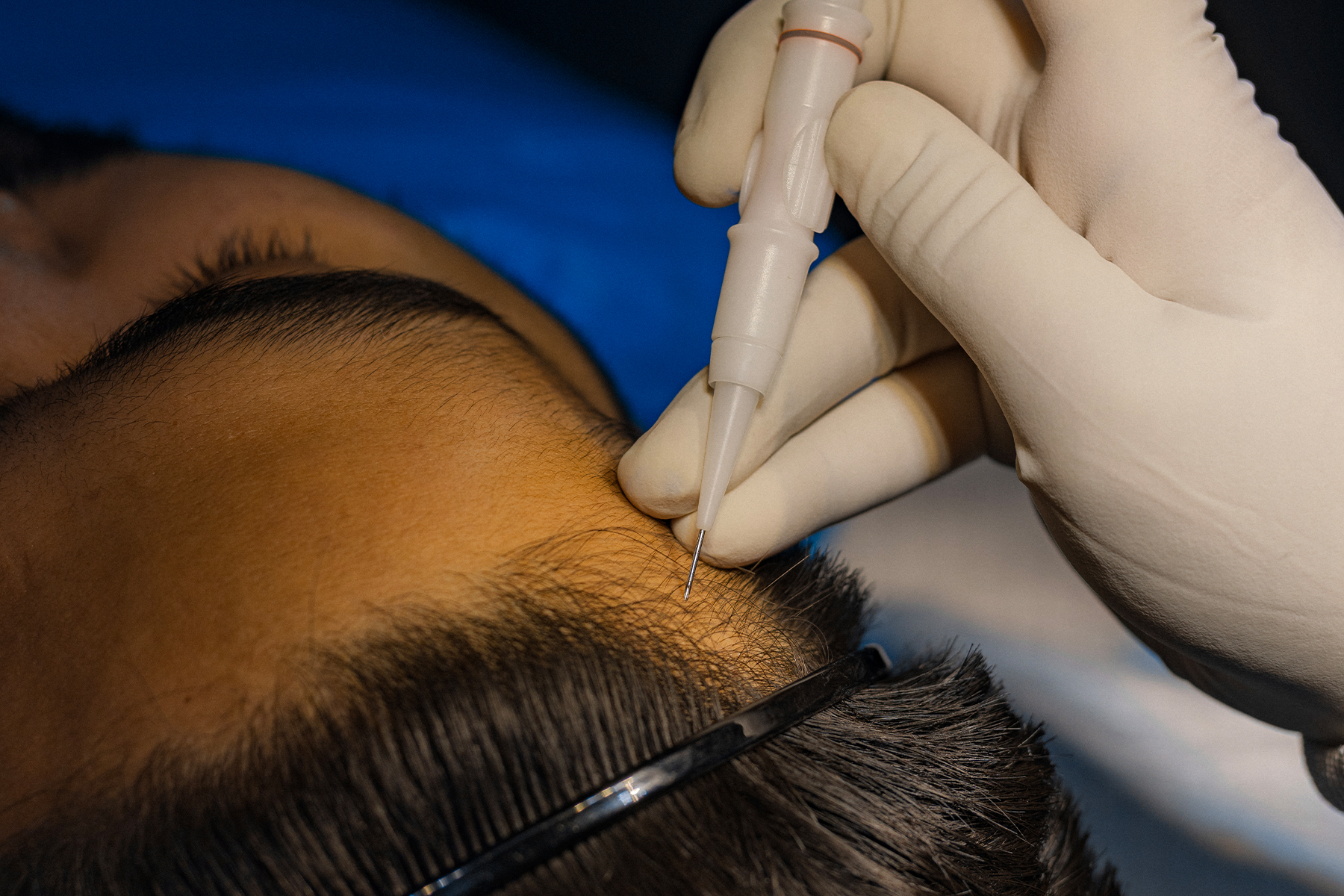
FUE hair transplant
Minimally invasive, no linear scar. Individual follicle extraction and implantation. The gold standard in modern hair restoration.
CHOI Implanter technology
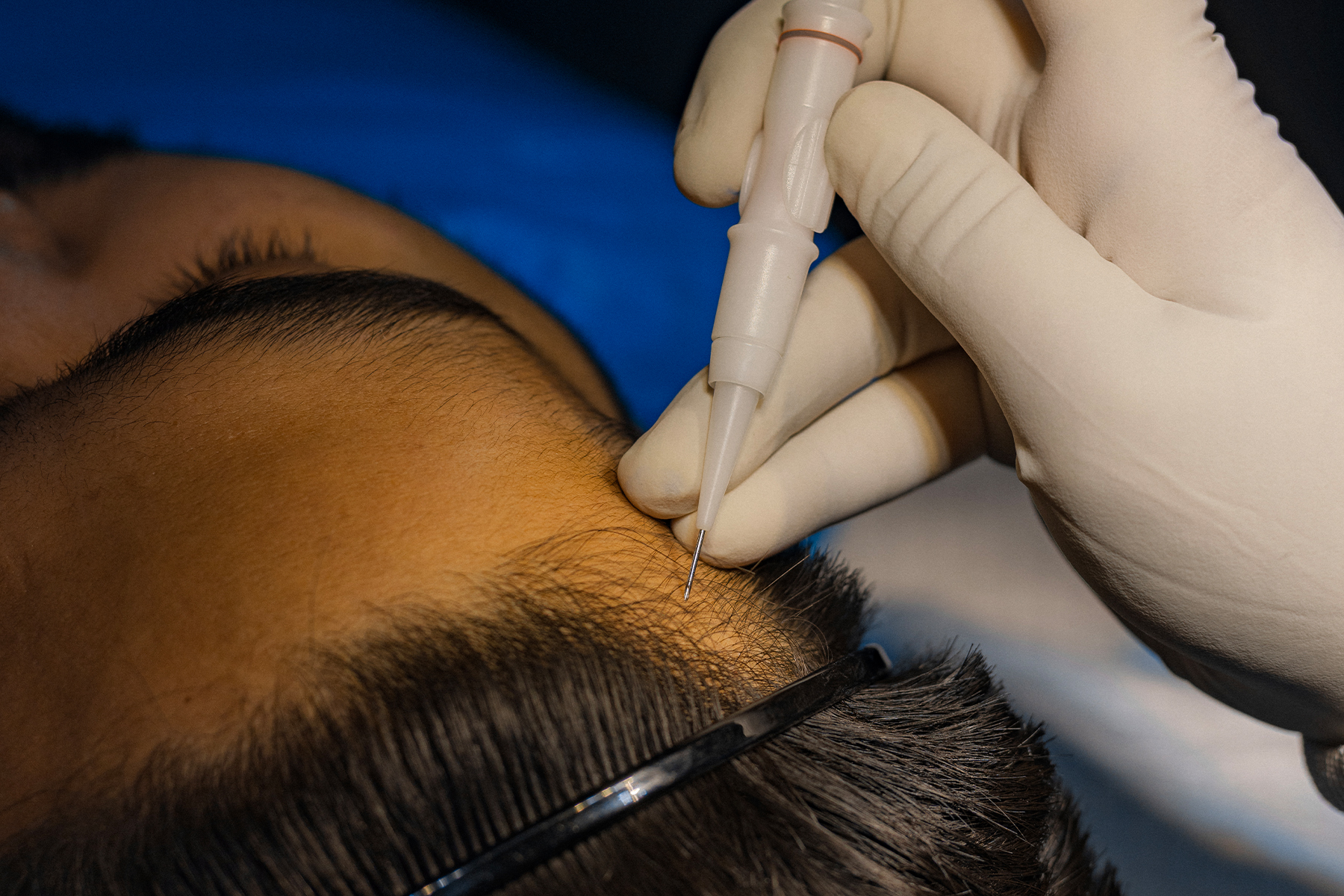
Direct hair transplant
CHOI Implanter technology for higher density, precise angulation, and a no-shave option. Ideal for hairline refinement.
Facial Hair restoration
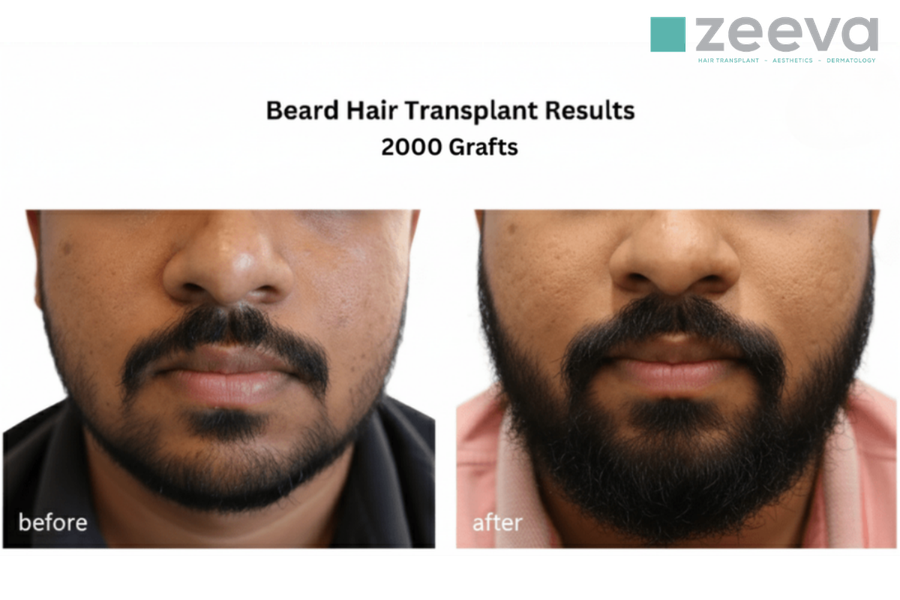
Beard transplant
Achieve a full, well-defined beard. Permanent solution for patchy or thin facial hair.
Eyebrow Restoration
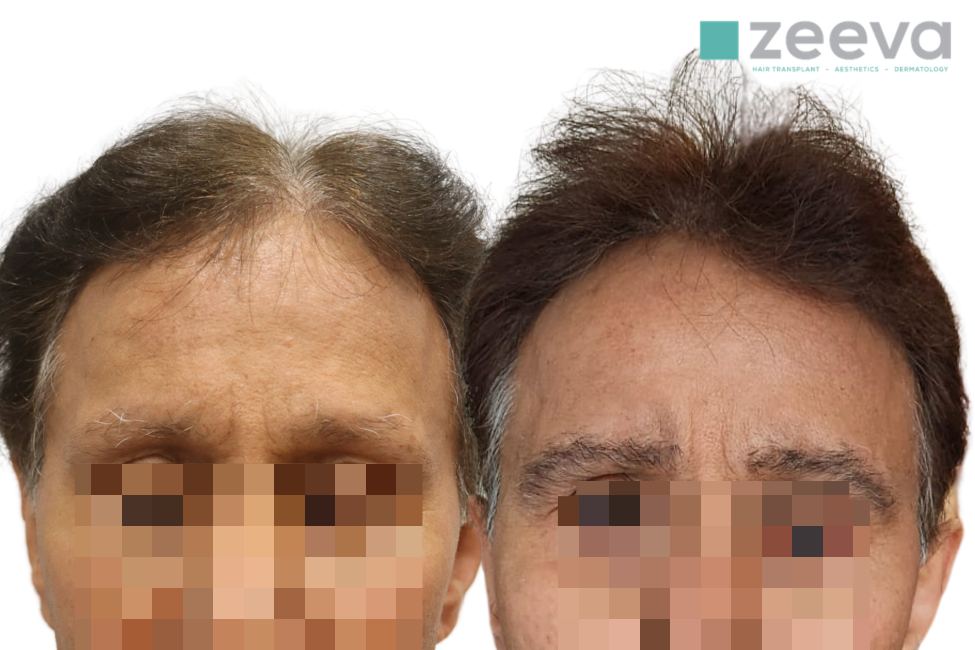
Eyebrow transplant
Restore full, natural eyebrows. Ideal for over-plucked, thin, or scarred brows.
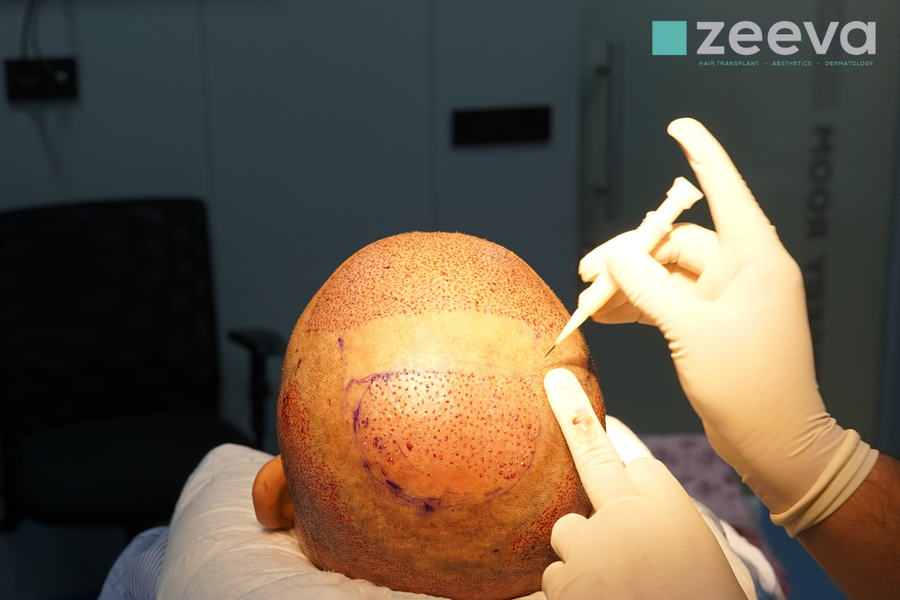
Vertex Restoration
Crown Transplant
Expert crown restoration with natural whorl pattern recreation. High-density grafting for the vertex area.
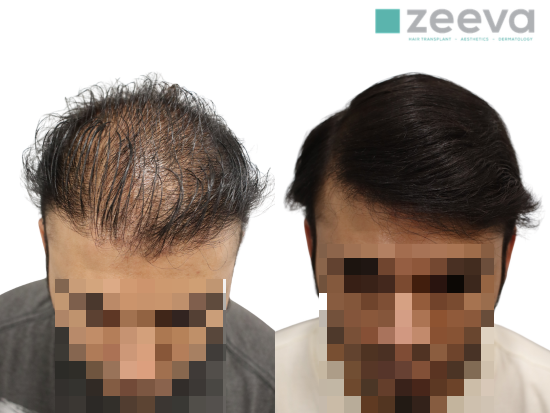
Corrective surgery
Transplant repair
Fix unnatural hairlines, pluggy grafts, poor density, and scarring from previous transplants.
FUE vs direct hair transplant, quick comparison
Not sure which technique is right for you? Compare the key differences.
| Feature | FUE | Direct hair transplant |
|---|---|---|
| Extraction method | Individual follicles via micro-punch | Individual follicles via micro-punch |
| Implantation | Pre-made channels, then graft placement | CHOI implanter placement without pre-made channels |
| Scarring | Tiny dot scars (nearly invisible) | Tiny dot scars (nearly invisible) |
| Recovery time | 7-10 days | 7-10 days |
| Graft survival rate | 95-98% | 95-98% |
| Max grafts per session | 4,000-5,000 | 3,000-4,000 |
| Shaving required | Yes (donor area) | Partial / No-shave option |
| Best for | Large areas, versatile | Hairline refinement, density boost |
| Cost (INR) | From ₹75,000 | From ₹90,000 |
Not sure which technique is right for you?
The Zeeva Clinic team will assess your hair loss pattern, donor area, and goals to recommend the most effective technique. Book an assessment today.
Chat on WhatsAppBook your assessment
Get a personalised hair restoration plan
Hair transplant FAQs
With modern methods like FUE and direct hair transplant, there is no long scar. Each graft is taken with a tiny punch, usually under one millimetre wide. This leaves a small dot, much like a pinprick, that heals within a few days.
In the first week, you may see small red dots at the back of the head. These fade quickly. By the second or third week, most patients find the dots are very hard to see. Once the hair grows back, even a short haircut hides them well.
The older strip method is different. It removes a band of skin from the back of the scalp and closes it with stitches. This leaves a thin line across the head, which can show with short hair. This is one reason most clinics, including Zeeva Clinic, now prefer FUE and direct hair transplant.
Some people scar more easily than others. If you have ever had thick, raised scars after a cut or surgery, tell the surgeon. This is sometimes called keloid scarring, and it needs extra care. A short check of your skin at the assessment helps the surgeon plan the safest way to take the grafts. If you are worried about marks, ask to see donor area photos of past patients taken a few months after surgery.
In most cases, no. A hair transplant is usually seen as a cosmetic procedure, so most health insurance plans in India do not pay for it. Insurers normally cover treatment that is needed for a medical reason, not one that improves appearance.
There can be exceptions. In rare cases, hair loss caused by a burn, an accident or a surgery may be treated as reconstructive. Even then, each insurer has its own rules. The decision depends on your policy, the cause of the hair loss and the paperwork from your doctor.
If you want to try, read your policy first. Look for the section on cosmetic or aesthetic procedures, and ask your insurer in writing before you book. Do not assume it will be covered. It is better to plan to pay yourself, and treat any claim as a bonus if it comes through.
At Zeeva Clinic, pricing is clear, and the final quote is given after an assessment. For patients in India, easy payment plans may be available through partners. The team can explain the options, so you can plan your budget without stress. Ask for the quote in writing and check what it includes. If you are unsure about any part of the quote, ask the team to explain it before you decide.
Start with the basics. Ask who will perform every step of the surgery. In some clinics, the doctor plans the work but technicians do the extraction and placement. It is fair to ask for a clear answer, and to prefer a surgeon who does the work personally.
Ask about the surgeon's training and certifications. A recognised credential in hair restoration, such as ABHRS, shows that the surgeon has been tested in this specific field. Ask how many procedures of your kind they have done, and ask to see before and after photos of cases like yours, taken at twelve months or later.
Ask about the plan for you. How many grafts will you need, and why? What technique do they suggest and why? What will your hairline look like, and how will it age with you? A good surgeon explains in plain words and does not rush you.
Finally, ask about cost and aftercare. What is included in the price? Are medicines and follow-up visits covered? How long will you have support after surgery? Write down the answers and compare them across clinics. A clear, honest talk is the best sign that you are in good hands. Take your time, and never feel pressured to book on the first call or visit.
Often yes, but only when the condition is well controlled. A hair transplant is a minor surgery done under local anaesthesia. It is safe for most people with stable health. The key word is stable. Uncontrolled conditions can raise the risk of bleeding, slow healing or infection.
With diabetes, high sugar levels can slow healing and make infection more likely. Your surgeon may ask for recent blood sugar tests and a note from your doctor. If your levels are in a safe range, surgery can usually go ahead. If not, it is better to wait and bring them under control first.
With high blood pressure, the main concern is bleeding during the surgery. Blood pressure is checked before and during the day. If it is well managed with your usual medicine, you can usually proceed. Do not stop your tablets without asking your own doctor first.
Other conditions also need care. These include heart problems, blood clotting disorders and thyroid disease. Tell the team about every health issue and every medicine you take, including blood thinners and supplements. An honest history helps the surgeon plan a safe day. It is always better to share too much than too little. Your own doctor can also guide you on the safest time for surgery.
Many surgeons advise it, especially for younger patients or for people whose hair loss is still active. A transplant protects the hair that was moved. It does not protect the natural hair around it. Medicines can help slow the loss of that surrounding hair.
The most common options are minoxidil, which is applied to the scalp, and finasteride, which is taken as a tablet for men. Some patients also use supportive treatments such as PRP or GFC. Each has its own pros and cons, and not every medicine suits every person.
Whether you need medicines depends on your age, your pattern of hair loss and your health. A man in his twenties with fast loss may benefit more than a man in his fifties with a stable pattern. Your surgeon can explain the choice at your assessment. Some patients prefer to avoid tablets, and that is a valid choice.
Never start, stop or change a medicine on your own. Some medicines have side effects, and they need medical advice. Tell the surgeon about anything you already take. If you do choose a plan, be patient. These medicines work slowly, and you may need three to six months to notice a change.
They do different jobs, so the answer depends on your hair. PRP, or Platelet Rich Plasma, is a non surgical treatment. It uses growth factors from your own blood to support weak hair follicles. It works best when thinning is early and the follicles are still alive.
A hair transplant moves healthy hair from the back and sides of the head to bald or thin areas. It is meant for people whose follicles have stopped growing hair in a certain area. PRP cannot bring back follicles that are completely inactive. A transplant can fill those areas with new, permanent hair.
For early thinning, PRP may be enough to improve thickness and slow the loss. For a clear bald patch or a receding hairline, a transplant is usually the better choice. Many people use both. A transplant fills the bald areas, and PRP helps protect the hair that remains.
Cost and time also differ. PRP is done in several sessions and needs repeat top ups. A transplant is a one time surgery for each area, with results that last. Dr. Anchal Shah can look at your scalp and tell you which is more likely to help. Starting early gives you the most choices.
Plan well ahead, ideally nine to twelve months before the date. Hair takes time to grow, and the full result of a transplant is seen at around twelve months. If you have the surgery too close to your event, the hair may not have grown yet.
The first month is the quiet phase. Scabs fall off in the first week or two, and the new hairs shed in the first month. Your scalp may look almost the same as before, and that is normal. New hair starts to appear from around month three, and it becomes thicker by month six.
If you have less time, a good look is still possible. At six months, many patients see a clear change, though the hair is still maturing. At three or four months, the scabs and redness have settled, and the donor area has healed. Even so, the final density will not be there yet.
Tell the clinic your date when you first enquire. The team can plan the timing and may suggest supportive treatments to help. Avoid doing the surgery in the last few weeks before an event. You may still have redness and a shaved or trimmed area. A calm plan gives you the best chance of looking your best on the day.
A hair transplant can be done at any time of year, but many patients prefer the cooler months. In India, this usually means the period from October to February. The weather is milder, and there is less sweat and strong sun on the healing scalp.
Summer brings heat and heavy sweating. In cities like Ahmedabad, temperatures can be very high. Sweat and dust can irritate the grafts in the first two weeks, and direct sun can burn healing skin. If you have surgery in summer, you need to stay indoors more and protect your head with care.
The monsoon has its own issues. High humidity and rain can make it harder to keep the scalp clean and dry. You may also face travel trouble on wet roads. Even so, many patients have good results at this time, as long as they follow the aftercare plan.
The best time is the one that fits your life. Think about work, travel, weddings and festivals. If you can take a week off in a cooler month, that is a good choice. If you need to go in another season, the team can give you extra tips. Tell them your plans, and they will help you choose a safe date.
Mild dandruff is common and does not usually stop you from having a transplant. It can often be managed with a medicated shampoo before surgery. Keeping the scalp calm and clean helps the grafts settle and lowers the chance of irritation.
Other scalp conditions need more care. These include seborrhoeic dermatitis, psoriasis, fungal infections and folliculitis. If the condition is active, with redness, flaking, pus or sores, the surgeon may ask you to treat it first. Doing surgery on an inflamed scalp can raise the risk of infection and poor growth.
Some conditions also change the type of hair loss. For example, scarring conditions of the scalp can destroy follicles, and a transplant may not be advised until they are stable. Autoimmune hair loss, such as alopecia areata, also needs a careful check. A transplant is not suitable for every cause of hair loss.
Be open about any itching, flaking or sores you have. The surgeon will examine your scalp at the assessment. In some cases, they may ask for a skin test or a note from a skin doctor. If a short course of treatment is needed, it is better to complete it first. A healthy scalp gives you a much better result.
Not straight away. For the first few weeks, the scalp is healing and the grafts are delicate. Hair dye, bleach and other strong products can irritate the skin and may harm the new grafts. It is best to wait until your surgeon says it is safe.
Most clinics advise waiting around three to four weeks before colouring the hair. In some cases, it is longer. The scalp should be fully healed, with no scabs or redness. Use a mild product and ask the team for advice on the safest type. A patch test on a small area helps check for any reaction.
Styling products need care too. Gels, wax, sprays and oils can clog the skin and make it harder to keep the scalp clean. Avoid them for the first two weeks, or longer if the team says so. Do not use a hot hair dryer on the grafted area, and do not comb hard over the new hairs.
After the healing period, you can style your hair as you wish. Transplanted hair can be cut, coloured and styled like natural hair. Many men also like to get a good haircut at around the time the first hairs appear. Ask the clinic for a clear date, and follow it closely.
Yes, donor hair is limited. It comes from the back and sides of the scalp, and there is only so much that can be taken safely. Once a follicle is moved, it cannot be put back. Good planning means using this supply wisely.
The number of grafts you can take depends on your donor density, the thickness of your hair and the size of the donor zone. A patient with thick, dense hair can give more than a patient with fine, sparse hair. The surgeon must also leave enough hair behind so that the donor area still looks natural.
If donor hair is running low, there are other options. Beard hair can be used to add density in the crown and middle of the scalp. At Zeeva Clinic, this is a speciality of Dr. Anchal Shah. In some cases, body hair may also be used. Scalp micropigmentation can add the look of density without using any donor hair.
The best way to avoid running out is to plan for the long term. Younger patients should be careful not to use too much donor hair too early. Save some for later changes in the hairline or crown. Ask your surgeon how much donor hair you have and how it will be shared over the years.
In many cases, yes, but the result needs care. Hair grafts can be placed into scarred skin to help cover marks from burns, injuries or past surgery. This is common for scars on the scalp, the beard area and the eyebrows.
Scar tissue has a weaker blood supply than normal skin. Grafts need blood to survive, so growth in scars may be lower than in healthy skin. The surgeon may use more grafts or place them more carefully. Some patients get a full result, while others get a partial one.
The type and age of the scar matter. A flat, soft, healed scar usually gives better results than a thick, tight or recent one. If the scar is new, the surgeon may ask you to wait for a year or more until it has settled. Sometimes a test patch is done first, to see how the skin takes the grafts.
The first step is a proper check. Send clear photos of the scarred area, or visit the clinic for an assessment. Dr. Anchal Shah can tell you how likely the grafts are to grow and how many you might need. If a transplant is not suitable, scalp micropigmentation may help to blend the scar into the surrounding hair.