Follicular Unit Extraction
FUE hair transplant
FUE is the gold standard in modern hair transplantation. Individual hair follicles are extracted one by one from the donor area and transplanted to thinning or bald areas, leaving no linear scar and ensuring rapid recovery.
What is FUE hair transplant?
Follicular Unit Extraction (FUE) is an advanced hair restoration technique where individual follicular units, each containing 1-4 hair strands, are extracted directly from the donor area using a micro-punch instrument (0.6-0.9mm diameter).
Unlike older strip methods, FUE leaves no linear scar. Instead, tiny dot-like marks in the donor area heal within days and become virtually invisible. This makes FUE the preferred choice for patients who want to wear short hairstyles.
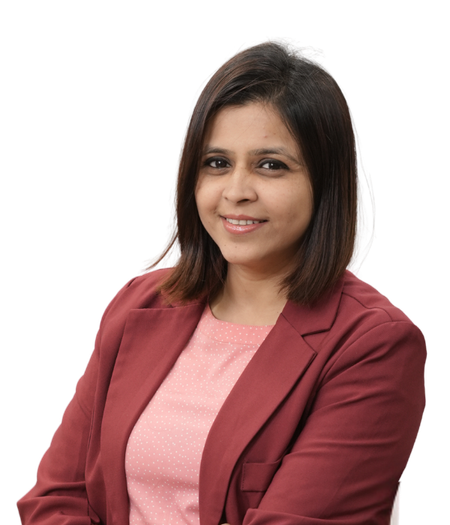
At Zeeva Clinic, Dr. Anchal Shah personally performs every stage of the FUE procedure, from extraction to implantation, ensuring precision, natural angulation, and optimal graft survival rates of 95-98%.

How we perform FUE hair transplant at Zeeva
Every step is personally performed by Dr. Anchal Shah, with no technicians and no shortcuts.
Hairline design and planning
Dr. Anchal Shah designs a natural, age-appropriate hairline using facial proportions, Norwood scale review, and your aesthetic preferences. Every detail is discussed and agreed upon before proceeding.
Local anesthesia
Comfort-first anesthesia is administered to the donor and recipient areas. You remain awake and comfortable throughout the procedure with zero pain.
Graft extraction
Using a micro-punch (0.6-0.9mm), individual follicular units are carefully extracted from the donor area. Every graft extracted by Dr. Anchal Shah personally.
Channel creation
Recipient channels are created at precise angles, depth, and direction matching natural hair growth patterns. This step determines the final naturalness of results.
Graft implantation
Each graft is carefully placed into the pre-made channels. Every graft implanted by Dr. Anchal Shah personally, ensuring maximum survival and natural density.
Key differentiator: Every graft extracted and implanted by Dr. Anchal Shah personally. No technicians handle the critical surgical steps.
Am I a candidate for FUE?
Ideal candidates
- ✓Norwood scale II to VI hair loss patterns
- ✓Patients who prefer to wear short hairstyles
- ✓Those seeking scar-free donor area recovery
- ✓Patients wanting a minimally invasive procedure
- ✓Body and facial hair transplant candidates
- ✓Corrective or repair transplant cases
May not be ideal for
- ✗Very advanced hair loss with limited donor supply
- ✗Active scalp infections or untreated skin conditions
- ✗Unrealistic expectations about density in a single session
Norwood scale note: FUE works best for Norwood II-V. For Norwood VI-VII, a combined FUE and direct hair transplant approach may be recommended for maximum coverage.
Before and after results
Real patient results from Zeeva Clinic. All procedures performed by Dr. Anchal Shah.

 BeforeAfter
3,200 grafts
United States
BeforeAfter2,800 grafts
United Kingdom

 BeforeAfter
4,000 grafts
India
BeforeAfter3,500 grafts
UAE
BeforeAfter2,500 grafts
Canada
BeforeAfter3,000 grafts
Australia
FUE vs direct hair transplant technique comparison
Understand the differences to make an informed decision with Dr. Anchal Shah.
| Feature | FUE | Direct hair transplant |
|---|---|---|
| Extraction method | Individual follicles via micro-punch | Individual follicles via micro-punch |
| Implantation | Pre-made channels, then graft placement | CHOI implanter placement without pre-made channels |
| Scarring | Tiny dot scars (nearly invisible) | Tiny dot scars (nearly invisible) |
| Recovery time | 7-10 days | 7-10 days |
| Graft survival rate | 95-98% | 95-98% |
| Max grafts per session | 4,000-5,000 | 3,000-4,000 |
| Shaving required | Yes (donor area) | Partial / No-shave option |
| Best for | Large areas, versatile | Hairline refinement, density boost |
| Cost (INR) | From ₹75,000 | From ₹90,000 |
Recovery timeline
Procedure day
Mild swelling and numbness. Bandage applied. Rest at hotel or home. Pain medication provided.
Initial healing
Tiny scabs form around grafted area. Gentle washing begins on Day 3. Avoid strenuous activity. Sleep elevated.
Shedding phase
Transplanted hair sheds. This is completely normal and expected. Donor area fully healed. Resume normal activities.
Early growth
Fine, new hair begins to emerge from transplanted follicles. Growth may be uneven at first. This is perfectly normal.
Visible progress
Significant new hair growth visible. Hair thickens and gains texture. Results start to take shape.
Final results
Full results visible. Hair has natural density, direction, and texture. Final assessment with the Zeeva Clinic team.
Pricing
Starting at
₹75,000
Final cost depends on the number of grafts required. All-inclusive packages available for international patients including hotel, airport transfers, and post-op care.
Frequently asked questions
FUE stands for Follicular Unit Extraction. This is the most common form of hair transplant surgery that is considered highly non-invasive and leaves no significant scars on the scalp.
During FUE, the surgeon uses a tiny circular tool to remove individual hair follicles, one at a time, from the donor area. Each follicle is carefully separated and kept safe while the recipient area is prepared. The grafts are then implanted into small incisions made in the balding or thinning region.
The reason why this method leaves no visible scar is the fact that the device used is very small in size, with the diameter not exceeding 1mm. In the place where the grafts were extracted there remain small spots which eventually fade away with the growth of hair in the area.
FUE can be applied to almost all patients regardless of the type and degree of balding. It provides an option for harvesting many follicles during one session with a high survival rate of the transplanted hair.
Direct hair transplant, often shortened to DHT, is a refined version of the FUE technique. The main difference lies in how the grafts are placed into the scalp.
In standard FUE, small channels are made in the recipient area first, and grafts are placed into them afterwards. In DHT, a special pen-like tool, often called a CHOI implanter, extracts and implants the graft in one continuous motion. This means the follicle spends less time outside the body before being placed back.
Reducing this time outside the body is important because follicles are delicate and can weaken the longer they are exposed to air. Faster implantation generally supports a higher graft survival rate.
DHT also gives the surgeon more precise control over the angle, depth, and direction of each hair, which is especially useful for designing a natural-looking hairline. It is often chosen when a patient wants very fine control over density in a specific area, such as the front hairline or crown.
Both FUE and DHT start the same way, by extracting individual follicles from the donor area using a small punch tool. The real difference is in the implantation stage that follows.
With FUE, the surgical team first creates tiny incisions across the recipient area and then places the grafts into them, often working in batches. With DHT, each follicle is loaded into an implanter pen and placed directly into the scalp without a separate incision step, all in one motion.
This difference affects a few practical things. DHT often allows slightly tighter graft placement, which can help with density, and it can reduce the time follicles spend outside the body. FUE, on the other hand, can usually be performed on larger areas more quickly, since incision-making and implantation can happen in parallel by different team members.
Neither technique is universally better. The right choice depends on the size of the area being treated, the density needed, and the surgeon's experience. During your consultation, the Zeeva Clinic team will recommend the technique that suits your specific case.
Both FUE and DHT can give excellent, natural-looking results when performed correctly. The real difference in outcome usually comes down to the skill of the surgeon rather than the technique itself.
DHT can offer a slight edge in graft survival, since follicles spend less time outside the body before being implanted. It also allows for very precise placement, which is helpful when working on the hairline, where angle and direction matter the most for a natural look.
FUE remains extremely reliable and is often preferred for larger sessions, where speed and coverage across a wide area are the priority. Its long track record and flexibility make it suitable for the majority of patients.
Rather than one technique being better overall, think of them as different tools suited to different needs. A skilled surgeon may even combine both approaches in a single session, using DHT for the hairline and standard FUE for filling in density behind it. This is exactly the kind of decision made during a proper consultation.
FUT, or Follicular Unit Transplantation, is an older hair transplant method, sometimes called the strip method. Instead of removing individual follicles, the surgeon removes a thin strip of skin from the back of the scalp. This strip is then divided into individual grafts under a microscope before being implanted.
FUT can extract a large number of grafts in one go and was once considered efficient for treating extensive baldness. However, it leaves a long, linear scar across the back of the head where the strip was removed.
This scar can limit hairstyle choices, especially very short haircuts, and the recovery from the strip removal itself tends to take longer and involves stitches. There is also a higher chance of numbness or tightness in the donor area afterwards.
Because of these downsides, most modern clinics, including Zeeva Clinic, have moved towards FUE and DHT instead. These newer techniques avoid a visible linear scar, involve a quicker recovery, and generally offer a more comfortable overall experience for the patient.
The CHOI implanter is a specialised pen-shaped tool used in direct hair transplant procedures. It looks a little like a fine pen with a hollow needle tip, designed to hold a single hair graft ready for implantation.
The surgeon loads a graft into the tip of the implanter, then presses it directly into the scalp at a chosen angle and depth. As the plunger is pressed, the graft is released into place in one smooth action. This removes the need for a separate step of creating incisions beforehand.
Because the tool controls angle, depth, and direction all at once, it gives the surgeon very fine control over how each hair will grow. This is particularly valuable when shaping a natural hairline, where even slight changes in direction can affect how realistic the final look appears.
At Zeeva Clinic, CHOI implanters are used for direct hair transplant procedures, along with disposable, single-use tips for each patient, to support both precision and hygiene throughout the surgery.
Yes, this is possible in many cases and is sometimes called a non-shave or unshaven hair transplant. It is a popular choice among patients who want to keep their procedure private or who cannot take time off to let a fully shaved head grow back.
In this approach, only a very small section of the donor area is trimmed short, thin enough to be hidden by the surrounding longer hair once the patient leaves the clinic. The recipient area usually does not need to be shaved at all, since grafts can be placed carefully between the existing hair strands.
This method takes more time and skill than a fully shaved procedure, since the surgical team has to work around longer hair rather than a clear, shaved scalp. It generally suits patients who need a lower to moderate number of grafts, such as those working on hairline density or filling in early thinning.
For patients needing a very large number of grafts, a partial or full shave often works better, allowing the surgical team to work more efficiently across a wider area.
The number of grafts needed depends mainly on the size of the area being treated and how advanced the hair loss is. There is no single number that applies to everyone, since every scalp and hair loss pattern is different.
As a general guide, mild thinning at the hairline might need somewhere around 1,000 to 1,500 grafts, while a receding hairline combined with crown thinning could need 2,500 to 3,500 grafts. More advanced baldness covering most of the scalp may require 4,000 grafts or more, sometimes spread across two sessions.
The quality and density of your donor area also matters. Someone with thick, dense donor hair may achieve a fuller look with fewer grafts than someone with finer or sparser donor hair.
The only reliable way to know your exact graft requirement is through a professional assessment. At Zeeva Clinic, this is done by examining your scalp and donor density in person or through clear photographs, followed by a personalised graft estimate and cost quote.
Ready to get started?
Book an assessment with the Zeeva Clinic team. Get a personalised treatment plan, honest assessment, and transparent pricing with clear next steps.
- Video assessment with the Zeeva Clinic team
- Personalised treatment plan and cost estimate
- Before/after photos of similar cases shared
- All-inclusive packages for international patients
Book your assessment
Get a personalised hair restoration plan