
Vertex Area Restoration
Crown hair transplant
The crown (vertex) is one of the most challenging areas to transplant due to its unique whorl pattern and high visibility from above. Dr. Anchal Shah's expertise ensures natural-looking crown restoration with proper directional grafting.
What is Crown hair transplant?
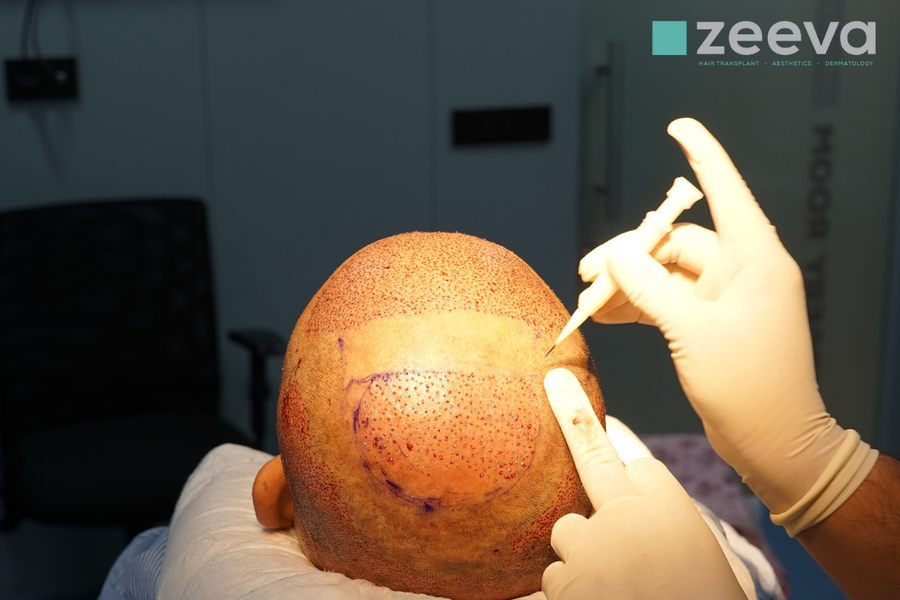
Crown hair transplant specifically addresses thinning or baldness at the top/back of the head (the vertex area). This area presents unique challenges because hair grows in a circular whorl pattern that must be precisely replicated for natural results.
Many surgeons avoid crown work because it requires more grafts per square centimeter (due to the whorl pattern exposing scalp) and because the results are highly visible from multiple angles. At Zeeva Clinic, Dr. Anchal Shah has extensive experience with crown restoration.
The key to successful crown transplantation is strategic planning, ensuring enough donor resources are preserved for current and potential future hairline needs while still achieving satisfying crown density.
How we perform Crown hair transplant at Zeeva
Every step is personally performed by Dr. Anchal Shah, with no technicians and no shortcuts.
Crown review and planning
The Zeeva Clinic team maps the crown whorl pattern, reviews density needs, and plans graft distribution. Strategic donor management ensures resources for both crown and hairline.
Local anesthesia
Comfortable anesthesia is administered to the donor and crown areas. The procedure is painless.
Graft extraction
High-quality follicular units are extracted from the donor area using micro-punch FUE. Every graft extracted by Dr. Anchal Shah personally.
Whorl Pattern Channel creation
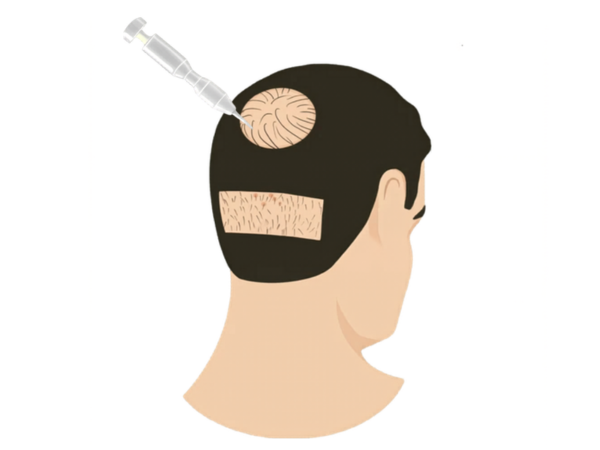
Channels are created in the crown following the natural circular growth pattern. This step is critical and requires exceptional skill to replicate the natural whorl.
Strategic implantation
Grafts are placed in a radial pattern emanating from the whorl center. Every graft implanted by Dr. Anchal Shah personally for maximum natural appearance.
Key differentiator: Every graft extracted and implanted by Dr. Anchal Shah personally. No technicians handle the critical surgical steps.
Am I a Candidate for Crown hair transplant?
Ideal candidates
- ✓Norwood III vertex to V patterns with crown thinning
- ✓Patients with stable hair loss (not rapidly progressing)
- ✓Those with adequate donor supply for both crown and potential hairline needs
- ✓Patients who have realistic expectations about crown density
May not be ideal for
- ✗Very early-stage crown thinning (medical therapy may be better first)
- ✗Patients with limited donor hair who also need hairline work
- ✗Rapidly progressing hair loss without stabilization
Norwood scale note: Crown transplant is typically recommended for Norwood III vertex through V. For Norwood VI-VII, a combined crown and hairline strategy is essential.
Before and after results
Real patient results from Zeeva Clinic. All procedures performed by Dr. Anchal Shah.

 BeforeAfter
3,000 grafts
India

 BeforeAfter
2,800 grafts
United States
BeforeAfter3,500 grafts
United Kingdom
BeforeAfter2,500 grafts
UAE
BeforeAfter3,200 grafts
Canada

 BeforeAfter
2,700 grafts
Germany
FUE vs direct hair transplant technique comparison
Understand the differences to make an informed decision with Dr. Anchal Shah.
| Feature | FUE | Direct hair transplant |
|---|---|---|
| Extraction method | Individual follicles via micro-punch | Individual follicles via micro-punch |
| Implantation | Pre-made channels, then graft placement | CHOI implanter placement without pre-made channels |
| Scarring | Tiny dot scars (nearly invisible) | Tiny dot scars (nearly invisible) |
| Recovery time | 7-10 days | 7-10 days |
| Graft survival rate | 95-98% | 95-98% |
| Max grafts per session | 4,000-5,000 | 3,000-4,000 |
| Shaving required | Yes (donor area) | Partial / No-shave option |
| Best for | Large areas, versatile | Hairline refinement, density boost |
| Cost (INR) | From ₹75,000 | From ₹90,000 |
Recovery timeline
Procedure day
Mild swelling and numbness. Bandage applied. Rest at hotel or home. Pain medication provided.
Initial healing
Tiny scabs form around grafted area. Gentle washing begins on Day 3. Avoid strenuous activity. Sleep elevated.
Shedding phase
Transplanted hair sheds. This is completely normal and expected. Donor area fully healed. Resume normal activities.
Early growth
Fine, new hair begins to emerge from transplanted follicles. Growth may be uneven at first. This is perfectly normal.
Visible progress
Significant new hair growth visible. Hair thickens and gains texture. Results start to take shape.
Final results
Full results visible. Hair has natural density, direction, and texture. Final assessment with the Zeeva Clinic team.
Pricing
Starting at
₹70,000
Crown transplant typically requires 2,000-4,000 grafts. Final cost depends on the size of the area and desired density.
Frequently asked questions
The crown is the circular area at the top and back of the head. It is one of the first places where male pattern baldness shows up, along with the temples. The main reason is genetics. Hair follicles in this area can be sensitive to a hormone called DHT, which makes them shrink over time.
When a follicle shrinks, the hair it grows becomes thinner and shorter. After a while, it may stop growing a visible hair. This happens slowly, so many men do not notice it until the bald spot is clear. Family history is a strong clue, though it is not a promise.
The crown is also hard to see for yourself. You cannot easily check it in a mirror, so friends and family often notice it before you do. The way hair swirls here also shows the scalp more easily. A small loss of hair can look bigger than it is.
Other causes can add to it. Stress, poor sleep, low iron, thyroid problems and some medicines can make hair thin. A doctor can help you tell these apart from pattern baldness. If the cause is genetic, treatment such as medicines, PRP or a transplant can be considered once the pattern is clear.
This needs careful thought. If hair loss is still moving, the bald area may grow bigger after the surgery. This can leave a patch of new hair with a ring of thinning around it. That is one of the main reasons surgeons look for a stable pattern first.
In many cases, the surgeon will advise starting with medicines or other treatments to slow the loss. PRP, GFC, minoxidil and finasteride are common examples. If these work, your hair loss may settle. You can then plan a transplant with more confidence about the long-term look.
Crown work also uses many grafts. If the crown keeps growing, you may need more grafts later. Your donor hair is limited, so using it all on the crown early may leave nothing for the hairline later. The surgeon will think about both and may save some donor hair for the future.
Dr. Anchal Shah looks at your age, family history and the speed of your hair loss. She will tell you honestly if it is better to wait. A good plan protects your result for many years. You can send photos online for a first view and visit the clinic for a full check. A short follow up every year lets you track change early and decide on the next step calmly.
Sometimes, yes. It depends on how many grafts are needed and how much donor hair you have. If your hairline needs 1,500 grafts and your crown needs 2,500, the total of 4,000 may be possible in one long session. If the total is much higher, it may be split.
A larger session takes longer. The surgeon must also take care not to over-harvest the donor area. Taking too many grafts at once can leave the back of the head looking thin. The grafts also spend more time outside the body in a very long session, so planning matters.
The surgeon will also decide the order of priority. The front hairline frames the face, so most patients want it done first. The crown is less visible from the front but shows from above and behind. For some men, covering the hairline and the middle gives the best look for the grafts available.
Your surgeon may suggest doing the hairline first and the crown later, or the other way round. A gap of around a year between sessions lets the first area grow and the donor area settle. Dr. Anchal Shah will plan the order based on your goals and your donor supply.
At Zeeva Clinic, a crown hair transplant starts from around ₹70,000. The final price depends on the number of grafts and the size of the area. Most crown transplants need between 2,000 and 4,000 grafts.
The cost goes up with the number of grafts. A small bald spot needs fewer grafts than a wide one. The crown also needs more grafts for each area than the hairline, because of the way the hair swirls and shows the scalp. The surgeon will count the grafts after looking at your head.
If you also need the hairline done, the total will be higher. Many patients choose to plan the two areas together, so the donor hair is shared in a sensible way. You will get a clear quote after your assessment, with no hidden charges. Ask the team exactly what is included.
International patients can ask about all-inclusive packages for the stay and transfers. It is wise to look at more than the price. Crown work is a skilled procedure, and a poor result is easy to see from above. Look for a surgeon who places every graft personally and can show you crown results at twelve months or more. Ask for the quote in writing, and check what is covered, so you can plan without any surprises.
The crown is a large, curved area, and the hair swirls out from a centre point. Because of this, the scalp shows easily if the density is low. The same number of grafts that gives a full look at the hairline may look light at the crown.
There are a few common reasons. One is that too few grafts were used for the size of the area. The crown can need a lot of hair to cover well, and donor supply is limited. A surgeon may choose to spread the grafts thinly rather than leave a gap, which can look light.
Another reason is time. The crown can be slower to mature. New hair may take twelve to fourteen months to reach full thickness. Judging the result at six months can feel disappointing, even though more growth is still coming. Patience matters here.
A third reason is that your own hair keeps thinning. If the natural hair around the transplant falls out, the area can look thin again, even though the grafts are healthy. Supportive treatment can slow this down. If you feel your crown is too thin, ask for a check. In some cases, a second session adds density.
Not always, but it is common for larger crown areas. A single session can give good cover for a small to moderate bald spot. For a wide area, or if you want high density, the surgeon may suggest a second session about a year later.
The reason is donor supply. The back and sides of the head can give a limited number of grafts safely. If your crown needs more than that, the work is split in two. This also lets the first set grow and shows how your hair loss is behaving before more donor hair is used.
A second session is not a sign that the first one failed. It is often part of the plan from the start. The surgeon may tell you in advance that two sessions give the best long-term look. This avoids spreading the grafts too thin in one go.
You should wait at least a year before the second session. This gives the transplanted hair time to reach its full thickness, and lets the donor area heal. Dr. Anchal Shah will tell you at the start whether one session is likely to be enough for you. Her advice is based on your donor hair, your age and the size of the area.
Sleep on your back with your head raised for the first week. Use two or three pillows or a wedge pillow, so that your head sits above your heart. This helps keep swelling down and protects the grafts at the top of the head.
Avoid lying on your side or your front. Pressing the crown into the pillow can rub or move the new grafts, especially in the first few days. A soft travel pillow around the neck can help stop you rolling over in your sleep. Some patients find a reclining chair easier for the first nights.
Use a clean pillowcase, and change it often. A soft cotton cover is a good choice. This lowers the chance of infection and keeps the area comfortable. Do not wear a tight cap or bandage to bed unless the clinic tells you to.
Most patients can return to a normal sleeping position after about ten days to two weeks, once the scabs have fallen. Your team will confirm when this is safe. Swelling can sometimes move down to the forehead and around the eyes in the first few days. This is normal and settles by itself. If it feels painful or worsens, contact the clinic.
For the first week or two, avoid anything that presses on the crown. Helmets, tight caps and hard hats can rub against the grafts and may pull them out. This is a real concern in India, where many people ride two wheelers every day.
If you must wear a helmet for safety, speak to the clinic before the procedure. Plan to take leave from riding for the first ten days to two weeks. Use a car, a taxi or a lift from a family member instead. Safety on the road is still important, so do not ride without a helmet if you have to ride.
When you do return to a helmet, make sure it is clean and loose. A soft cotton cap or scarf under the helmet can help, but it must also be clean. Do not pull it on and off quickly. Take it off gently by lifting from the front and back.
A loose, soft cap is usually fine after about two weeks, but your surgeon will tell you the exact date. If you work on a site where a hard hat is needed, plan your leave. Ask the team to give you a clear date based on how your scalp is healing.
It can, and this is something your surgeon plans for. The whorl is the spiral where the hair grows out from a centre point. As hair loss spreads, the bald area can grow wider, and the natural whorl may look different over the years.
The transplanted grafts stay where they were placed. They follow the whorl pattern the surgeon built at the time. If the hair around them thins, the centre may start to look bigger or different. This is why the surgeon thinks about future loss, not only the current bald patch.
A good plan places the grafts in a pattern that will still look natural if the area expands. The surgeon may also keep some donor hair for a later session. This lets you add to the crown if needed. Supportive treatment can also help slow the loss in the surrounding hair.
Regular check ups help you stay on top of change. Taking a photo of your crown every few months lets you see slow movement. If you notice the bald patch growing, tell the clinic. Dr. Anchal Shah can advise whether medicine, PRP, GFC or a second session would help you keep the look balanced. Keeping a record of photos helps you and the surgeon spot small changes early and act on them.
In some cases, yes, but it is less common than in men. Women usually lose hair in a different way. Instead of a clear bald spot, many women see overall thinning or a wider parting. A crown transplant is only suitable when there is a clear, stable area that needs cover.
Before any plan is made, the cause of the thinning should be checked. Thyroid problems, low iron, hormone changes and stress can all cause hair loss in women. Some of these can be treated without surgery. A transplant is only worth doing when the cause is understood and the pattern is stable.
If the donor area at the back of the head is thick and healthy, a transplant may work. The surgeon will check the donor hair carefully. In women with diffuse thinning, the donor hair may also be thin, which makes surgery less suitable.
Women often prefer a no shave or partial shave approach, so the longer hair can cover the donor area. This takes more time and suits smaller numbers of grafts. Dr. Anchal Shah will tell you honestly whether you are a good candidate. You can send photos for a first opinion before visiting the clinic.
The scalp is sensitive after a transplant, and the crown is the part that faces the sun most. For the first few weeks, keep direct sun off the area. Strong sun can burn the skin, slow healing and cause redness or dark marks.
Wear a loose, clean cap or hat when you go out, but only after the clinic says it is safe. In the first week or so, avoid anything that touches the grafts. A better choice early on is to stay indoors during the hottest hours and use shade or an umbrella. Do not apply sunscreen to the grafted area unless the team advises it.
Hot weather brings sweat, which can also irritate the scalp. Avoid heavy outdoor work and long hours in the heat for the first two weeks. This matters in cities such as Ahmedabad, where summers are very hot. Drink plenty of water and rest in a cool place.
After the scalp has healed, usually around three to four weeks, you can start to use sun protection again. A broad hat and a mild sunscreen on the skin help to protect it. Ask your surgeon when to restart. Good sun care also helps the transplanted hair stay healthy for the long term.
Ready to get started?
Book an assessment with the Zeeva Clinic team. Get a personalised treatment plan, honest assessment, and transparent pricing with clear next steps.
- Video assessment with the Zeeva Clinic team
- Personalised treatment plan and cost estimate
- Before/after photos of similar cases shared
- All-inclusive packages for international patients
Book your assessment
Get a personalised hair restoration plan