Natural Eyebrow Restoration
Eyebrow transplant
Restore full, beautifully shaped eyebrows with a permanent transplant. Whether your brows are thin from over-plucking, genetics, medical conditions, or scarring, Dr. Anchal Shah creates natural, perfectly shaped eyebrows tailored to your face.
What is an Eyebrow transplant?
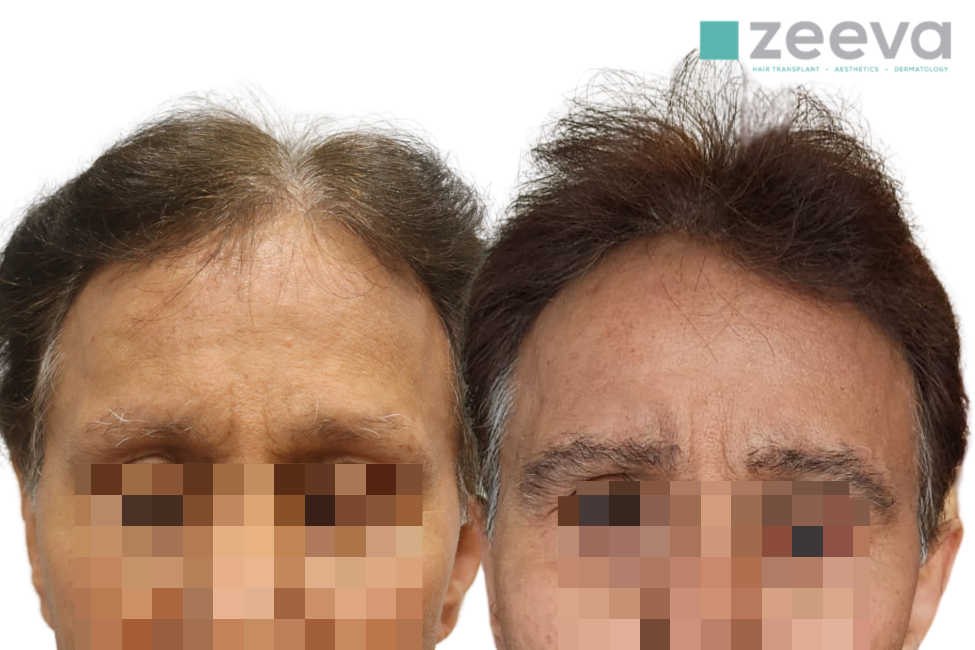
An eyebrow transplant uses FUE to harvest fine, single-hair follicular units from the scalp and carefully implant them into the eyebrow area. The procedure restores shape, fullness, and symmetry to thin, sparse, or absent eyebrows.
Eyebrow transplantation is one of the most delicate hair restoration procedures. Each graft must be placed at the exact angle and direction of natural eyebrow hair, which grows almost flat against the skin, unlike scalp hair.
Dr. Anchal Shah's artistic eye and surgical precision are critical for eyebrow work. She carefully designs the brow shape to complement your facial features, age, and gender, creating a result that looks naturally yours.
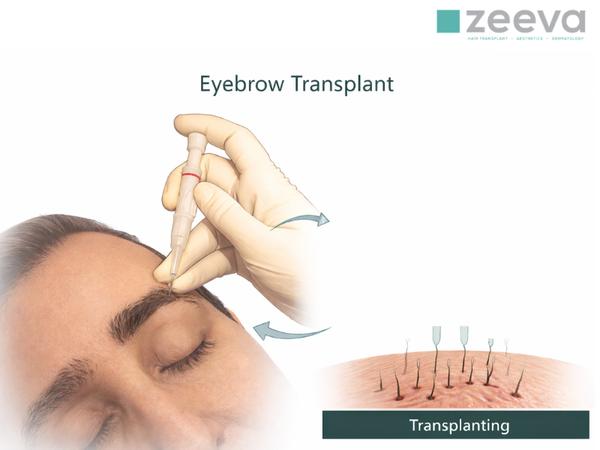
How we perform Eyebrow transplant at Zeeva
Every step is personally performed by Dr. Anchal Shah, with no technicians and no shortcuts.
Eyebrow design
Dr. Anchal Shah designs the ideal eyebrow shape, arch, and density for your face. You review and approve the design before proceeding. Both brows are designed for symmetry.
Local anesthesia
Gentle anesthesia is administered to the donor area and eyebrow region. The procedure is painless.
Fine graft extraction
Single-hair follicular units are extracted from behind the ear or the nape, areas with fine hair that best mimics eyebrow texture. Every graft extracted by Dr. Anchal Shah personally.
Precision channel creation
Ultra-fine channels are created at the exact angle, depth, and direction of natural eyebrow growth, nearly parallel to the skin surface.
Micro-implantation
Each graft is placed one by one with extreme precision. Every graft implanted by Dr. Anchal Shah personally to ensure perfect direction and natural flow.
Key differentiator: Every graft extracted and implanted by Dr. Anchal Shah personally. No technicians handle the critical surgical steps.
Am I a candidate for eyebrow transplant?
Ideal candidates
- ✓Over-plucked or over-waxed eyebrows that no longer grow back
- ✓Naturally thin or sparse eyebrows
- ✓Eyebrow loss from alopecia areata or other medical conditions
- ✓Scarring from injury, burns, or previous surgery
- ✓Chemotherapy-related eyebrow loss
- ✓Desire for fuller, more defined brows without daily makeup
May not be ideal for
- ✗Active skin infections in the eyebrow area
- ✗Certain autoimmune conditions causing ongoing hair loss
- ✗Unrealistic expectations about immediate fullness
Before and after results
Real patient results from Zeeva Clinic. All procedures performed by Dr. Anchal Shah.

 BeforeAfter
350 grafts
India
BeforeAfter400 grafts
United States
BeforeAfter300 grafts
UAE

 BeforeAfter
450 grafts
United Kingdom
BeforeAfter280 grafts
Australia
BeforeAfter380 grafts
Saudi Arabia
FUE vs direct hair transplant technique comparison
Understand the differences to make an informed decision with Dr. Anchal Shah.
| Feature | FUE | Direct hair transplant |
|---|---|---|
| Extraction method | Individual follicles via micro-punch | Individual follicles via micro-punch |
| Implantation | Pre-made channels, then graft placement | CHOI implanter placement without pre-made channels |
| Scarring | Tiny dot scars (nearly invisible) | Tiny dot scars (nearly invisible) |
| Recovery time | 7-10 days | 7-10 days |
| Graft survival rate | 95-98% | 95-98% |
| Max grafts per session | 4,000-5,000 | 3,000-4,000 |
| Shaving required | Yes (donor area) | Partial / No-shave option |
| Best for | Large areas, versatile | Hairline refinement, density boost |
| Cost (INR) | From ₹75,000 | From ₹90,000 |
Recovery timeline
Procedure day
Mild swelling around the brow area. Tiny scabs form around grafts. Avoid touching the area.
Initial healing
Scabs naturally shed. Mild redness fades. Avoid makeup on the brow area. Gentle cleansing allowed.
Shedding phase
Transplanted hairs shed. This is completely normal. Brow area looks as before but healing is happening beneath the surface.
Early growth
New eyebrow hair begins to emerge. Fine and wispy at first, thickening over time.
Visible results
Eyebrows filling in with new growth. Regular trimming may be needed as transplanted hair grows faster than natural brow hair.
Final results
Full, natural eyebrows established. Periodic trimming required since transplanted hair retains scalp growth cycle.
Pricing
Starting at
₹40,000
Eyebrow transplant typically requires 200-500 grafts per brow. Cost depends on the extent of restoration needed.
Frequently asked questions
An eyebrow transplant suits people whose brows are thin, patchy or missing, and where the hair is not likely to return by itself. Common reasons include years of over-plucking or waxing, naturally sparse brows, scarring from an injury or burn, and hair loss linked to certain medical conditions.
You also need healthy donor hair on your scalp. The surgeon takes fine hairs from behind the ear or the nape, so the quality of that hair matters. The skin around the brow should be free from infection or active skin problems. If there is a problem, it should be treated first.
Expectations also matter. A transplant gives you real, living hair that grows and needs trimming. It will not look like a pencil line or a tattoo. Some patients also want a very specific shape, and the surgeon will explain what suits your face, bone structure and age.
At Zeeva Clinic, Dr. Anchal Shah reviews your face in detail before any plan is made. You can send photos online for a first opinion. If an eyebrow transplant is not the right choice for you, the team will say so honestly and may suggest another option. A short video call is often enough to start, and there is no pressure to commit to anything.
They do different things, so it depends on what you want. Microblading and tattooing place pigment in the skin to create the look of brow hair. An eyebrow transplant places real hair that grows. This makes the result feel more natural to many people.
Pigment fades over time. Microblading usually needs touch ups every year or two, and tattoo colour can change shade. A transplant is permanent, since the grafts keep growing in their new place. That means no regular top up for the shape itself.
Transplanted hair needs more care. It grows at the speed of scalp hair, so you will need to trim it every week or two. Microblading needs no trimming. Some people prefer not to have this extra job, while others like having real hair that responds to a brow brush.
The cost is also different. A transplant costs more at the start, but there are no repeat sessions. Pigment treatments cost less each time but add up over the years. Dr. Anchal Shah can talk through your options. For people who want real hair, or who have scars where pigment does not hold well, a transplant is often a better fit. Many people try pigment first and later move to a transplant, so it is fine to take your time over this choice.
The hair in these areas is fine and short, and it is a close match for eyebrow hair. Thicker hair from the top of the scalp would look heavy and coarse on the brow. The surgeon looks for fine, single hair grafts to give a soft, natural look.
These areas also hold hair that is safe to use. The back and sides of the head carry hair that keeps growing for life, even when the top of the scalp thins. The grafts keep this ability when they move to the brow, so the result is permanent.
Only a small number of grafts are needed. A full brow usually takes 200 to 400 grafts for each side. Taking this small number from the donor area leaves no visible gap. The tiny dots left by the punch heal within days and are hidden by the hair around them.
The donor spot is chosen with care. The surgeon checks the hair thickness, the number of hairs in each follicle and the way they grow. Only the best grafts are picked. This takes time and skill, and it is one reason why eyebrow work is seen as delicate. Ask the surgeon to show you where the donor area is, so you know exactly what will be trimmed.
Yes, the hairs will shed at first, and this is normal. About two to four weeks after surgery, most of the transplanted hairs fall out. This can be alarming if you do not expect it. It does not mean the transplant has failed.
The hair shaft falls out, but the root stays alive under the skin. After a rest period, the root starts to grow a new hair. For a time, your brows may look much like they did before the surgery. This is the quiet stage, and healing is still going on underneath.
New hairs begin to appear around month three. They are thin and soft at first, and they may look uneven. By month six, the brows fill in and begin to take shape. The full result is usually seen at around twelve months, once the hair has thickened.
Do not pluck, wax or thread the new hairs as they come in. Give them time to grow. If you are worried about the pace of growth, ask the clinic to check in with you. Sending photos each month is a good way to see slow change. Most patients find the wait worthwhile once their brows are fully grown.
At Zeeva Clinic, an eyebrow transplant starts from around ₹40,000. The final cost depends on how many grafts you need. This is usually between 200 and 500 grafts for each brow, depending on the amount of hair that needs to be restored.
A light fill in for a partial gap needs fewer grafts than a full rebuild of a missing brow. If you are treating one brow, the cost is lower than treating both. The surgeon will count the grafts after looking at your face and your goals, and you will get a clear quote.
International patients can ask about all-inclusive packages, which bring together the surgery, hotel and airport transfers. This makes planning easier. Because eyebrow work is short, many patients can fit it into a brief stay in Ahmedabad. Ask the team how long you need to stay for your case.
It is worth thinking about value. Eyebrows are a very visible part of the face, and mistakes are hard to hide. A cheaper quote from a clinic with little eyebrow experience can end up costing more if the shape looks wrong. Look for a surgeon who personally places every graft and who can show you real before and after photos.
Not straight away. For the first week, keep the brow area clean and free of makeup. The skin is healing, and tiny scabs sit around each graft. Makeup, brow pencils and gels can irritate the skin or move a graft.
Do not pluck, wax or thread the area. This includes the new hairs and the ones around the edges. Tweezers can pull out a new graft or damage a healing root. Leave the brow alone until the surgeon says it is safe to start again.
Once the scabs have fallen and the skin looks calm, you can usually start light makeup again. This is often after about a week to ten days, but your team will confirm for you. Use clean brushes and gentle products, and wash them off carefully at night.
After the hair has grown, you can shape the brows as you wish. The transplanted hair can be trimmed, brushed and filled with powder like natural brows. Many patients find it helpful to trim the hairs lightly every one to two weeks. If you plan to use a brow lamination or other treatment, ask the surgeon first. Ask the team for a written aftercare sheet, so you can check the dates whenever you are unsure about something.
Often, yes. Grafts can be placed into a scar that cuts through the eyebrow, or into a gap left by an injury, a burn or an old operation. When the hair grows, it fills the gap and helps the scar blend into the brow.
Scars need careful checking. Scar tissue has less blood supply than normal skin, so grafts may not always take as well. The surgeon may use more grafts, or place them more closely, to improve the result. Some scars give a full result, while others give a partial one.
The age and type of the scar matter. A healed, flat scar usually works better than a recent or very tight one. If the scar is still new, the surgeon may ask you to wait until it has matured. This can take a year or more after the injury or operation.
Send clear photos of the area for a first opinion. The team can tell you if a transplant is likely to help and how many grafts it might need. Dr. Anchal Shah will also check how the rest of the brow looks, so the repair blends well with the hair you already have. Sharing a clear close up photo in natural light helps the team give a more useful first opinion.
Yes. The shape is one of the main things planned before the surgery. Dr. Anchal Shah draws the design on your face, with the arch, the length and the thickness. You can look in a mirror and agree on it before the procedure starts.
The design is planned around your face. The surgeon looks at your bone structure, the position of your eyes and your age. Men and women often want different shapes. Men usually prefer a flatter, thicker brow, while many women prefer a lighter arch. Both brows are drawn to match.
A transplant can also fill in a brow that has lost its tail or middle. It can make a thin brow fuller or give shape to a brow that has none. The grafts are placed in the direction that natural brow hair grows, which is flat and close to the skin.
Keep in mind that the final shape depends on the hair that grows. You can trim it to keep the line neat. If you later want a different shape, the brow can be trimmed or tweezed within the transplanted area. Large changes later may need more grafts, so it is worth choosing a shape you are happy with.
Yes, when done by a trained surgeon in a clean, well-equipped clinic. The work is done on the brow ridge, which sits above the eye, and the instruments do not go near the eyeball. The procedure uses local anaesthesia, and the area is numbed before work begins.
The main risks are small and short-lived. You may see mild swelling around the brow or the upper eyelid for a day or two. Some patients get light bruising. Tiny scabs and redness settle within about a week. Serious problems are rare when strict hygiene is followed.
Hygiene is key. The clinic should use single-use tips and sterile tools for every patient. The skin should be cleaned well before the procedure. After surgery, you will be told how to care for the area, and following those steps lowers your risk of infection.
Tell the surgeon about any eye or skin conditions, allergies and medicines before the day. If you use eye drops, have had eyelid surgery or take blood thinners, say so. Contact the clinic at once if you notice pain, strong redness, discharge or any change in your vision. Most patients heal with no trouble. Choose a clinic that is open about its hygiene steps and happy to answer every question you ask.
It depends on the cause and the stage of your condition. For hair loss after chemotherapy, a transplant may be an option once treatment has finished and the body has recovered. Your doctor and the surgeon should agree on a safe time. Some patients find their brows grow back by themselves, so waiting can be sensible.
Alopecia areata is different. It is an autoimmune condition where the body attacks hair follicles, and it can come and go. If the condition is active, transplanted hair may also be affected. This is why certain autoimmune conditions are listed as not ideal for the procedure.
If your condition has been stable for a good time, the surgeon may consider it. The decision is made case by case. You will be asked about your history, the medicines you take and how long your hair loss has been stable. Some patients may need a medical check from their own doctor first.
The most useful step is an honest assessment. Send photos and a short history to the clinic. Dr. Anchal Shah will tell you whether a transplant is likely to work for you, or whether waiting or another option is better. It is always safer to know before you book.
Most patients feel ready to return to normal life within a few days. The procedure is short and is done in one day. You go home or back to your hotel the same day, and you can usually rest and heal with very little disruption.
In the first day or two, you may notice mild swelling around the brows and sometimes the eyelids. This often settles within three to five days. Small scabs form around each graft and fall off within about a week. Some people prefer to take a few days off work while the skin looks red.
Avoid touching or rubbing the brows. Do not use makeup, sweat heavily or swim for the first week or two. Sleep on your back with your head slightly raised, which helps keep swelling down. Wash gently as the team shows you, and keep the skin clean.
Light daily activity is fine. Desk work, walking and short outings are usually no problem. Hard gym work, hot yoga and dusty places are better left for a couple of weeks. Your surgeon will give you an exact guide at your follow-up. If you are travelling from abroad, ask how long to stay before flying home.
Ready to get started?
Book an assessment with the Zeeva Clinic team. Get a personalised treatment plan, honest assessment, and transparent pricing with clear next steps.
- Video assessment with the Zeeva Clinic team
- Personalised treatment plan and cost estimate
- Before/after photos of similar cases shared
- All-inclusive packages for international patients
Book your assessment
Get a personalised hair restoration plan